
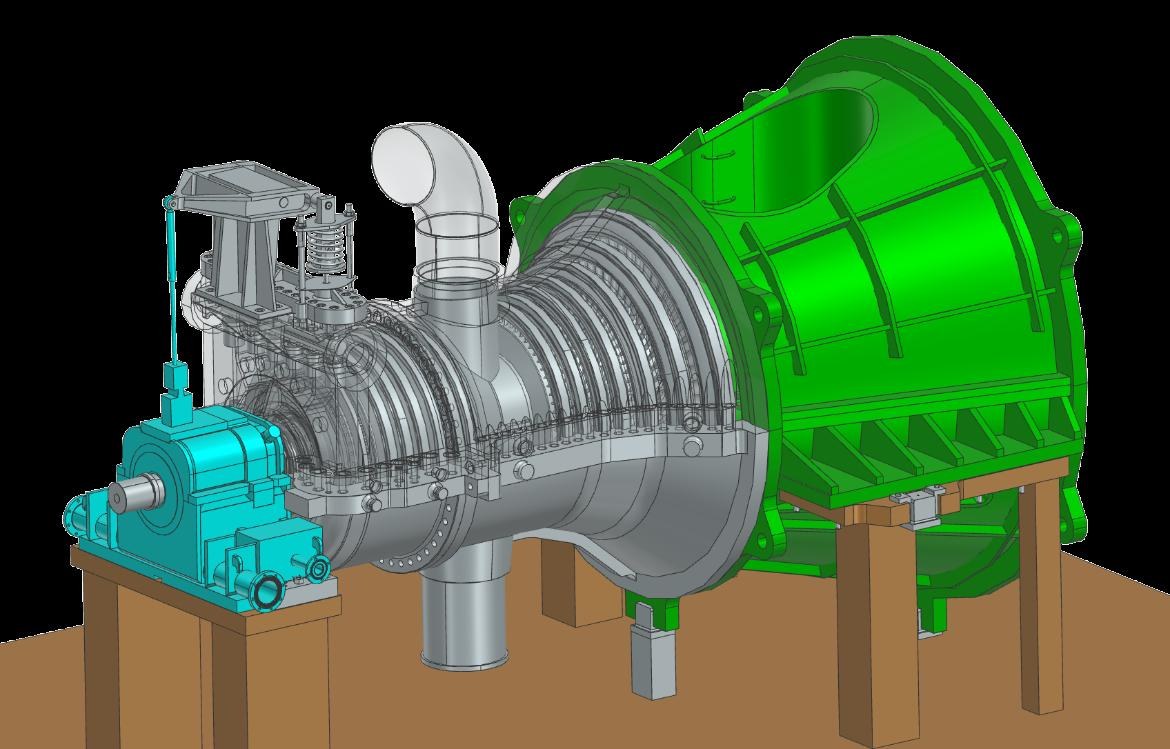
Industrial Steam Turbines
Turn difficult low-parameter steam into useful power.
Customized turbine-generator systems for saturated, negative-pressure, flash, ash-bearing and corrosive steam conditions.
Best Fit
Use this route when plant steam already exists but is difficult to recover with standard power blocks.
- Saturated, flash, wet or low-pressure steam is currently cooled, vented or pressure-reduced.
- The downstream process still needs stable steam conditions after power recovery.
- The site must evaluate moisture, composition and erosion risk together with output potential.
Fast Assessment
Send four inputs to start the review.
- Steam type and composition
- Inlet and outlet pressure target
- Temperature and flow range
- Moisture level and downstream steam demand
Typical next step
We first judge whether a steam-turbine route is suitable under the actual process limits, then move into configuration discussion.
Application Engineering
Recover steam that is otherwise flashed, cooled or vented.
Each system is designed around steam composition, pressure, moisture, downstream use and plant-control requirements. Boomtec supports back-pressure, condensing and customized recovery configurations.
Steam Conditions
Published technical data covers saturated, low-pressure, negative-pressure and difficult process-steam applications.
- Reference inlet conditions from 80 kPa(A) to 3.6 MPa(A)
- Flash, wet, ash-bearing and corrosive steam routes
- Inlet and outlet boundaries defined with the process owner
Moisture and Materials
Moisture, erosion and corrosion risks are evaluated before equipment configuration.
- Wet-steam applications with moisture up to approximately 17%
- Materials and blade-path details selected for the medium
- Control strategy aligned to downstream steam demand
Project Inputs
A practical technical review needs the steam condition and the process boundary together.
- Pressure basis, temperature, flow and composition
- Moisture range and operating profile
- Downstream steam use or condensation requirement
Steam Turbine Technical Data